
Understanding Door Swing Direction
Every double iron door has two panels — an active panel (your primary entry) and an inactive panel (secured with flush bolts). Both panels can be fully opened when needed.
Active Panel
The panel you open daily. It holds the handle and lock set. Choose left or right based on which hand you naturally reach for when entering your home.
Flush Bolts (Top & Bottom)
The inactive panel is held closed by two metal rods — one slides up into the header and one slides down into the threshold. Simply slide them open when you need full double-door clearance.
Inswing vs. Outswing
Inswing opens into the house — the most common choice. Outswing opens outward — better for tight entryways or areas prone to strong winds and storms.
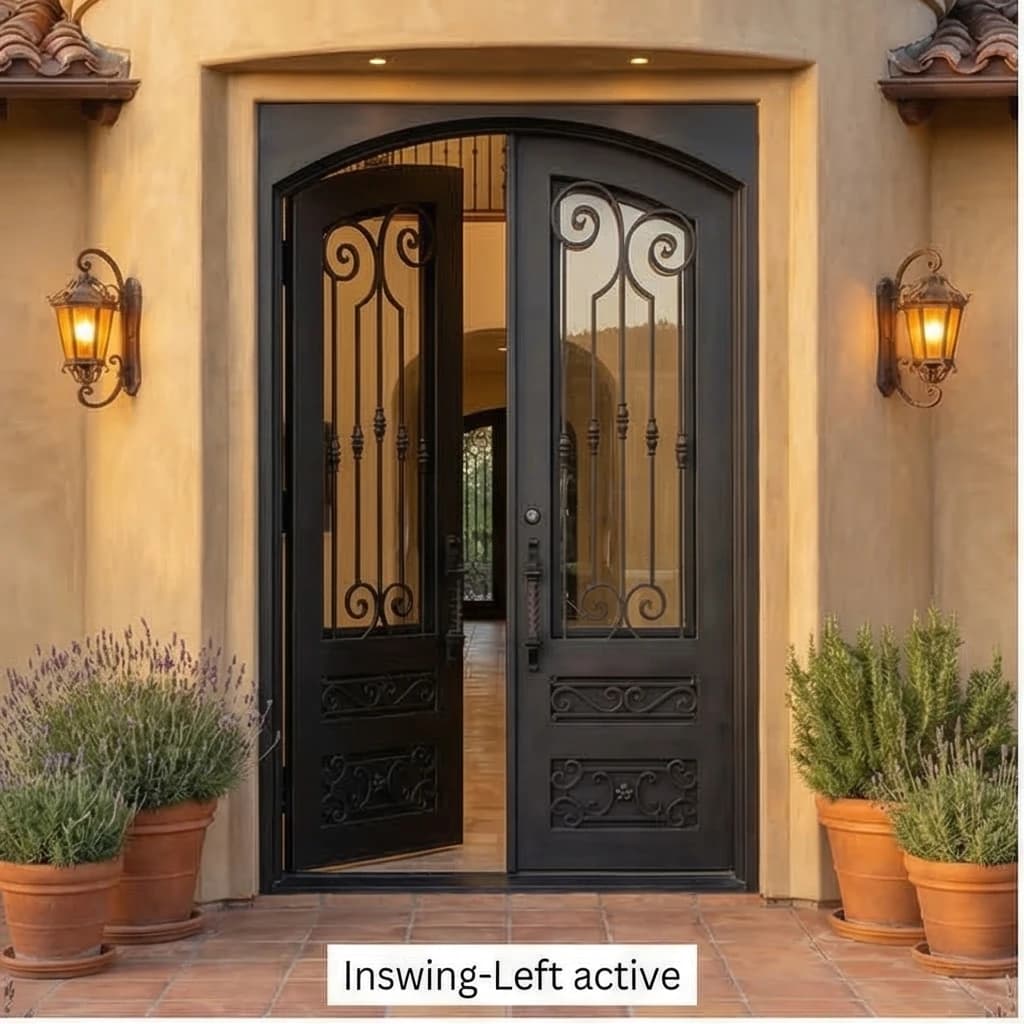
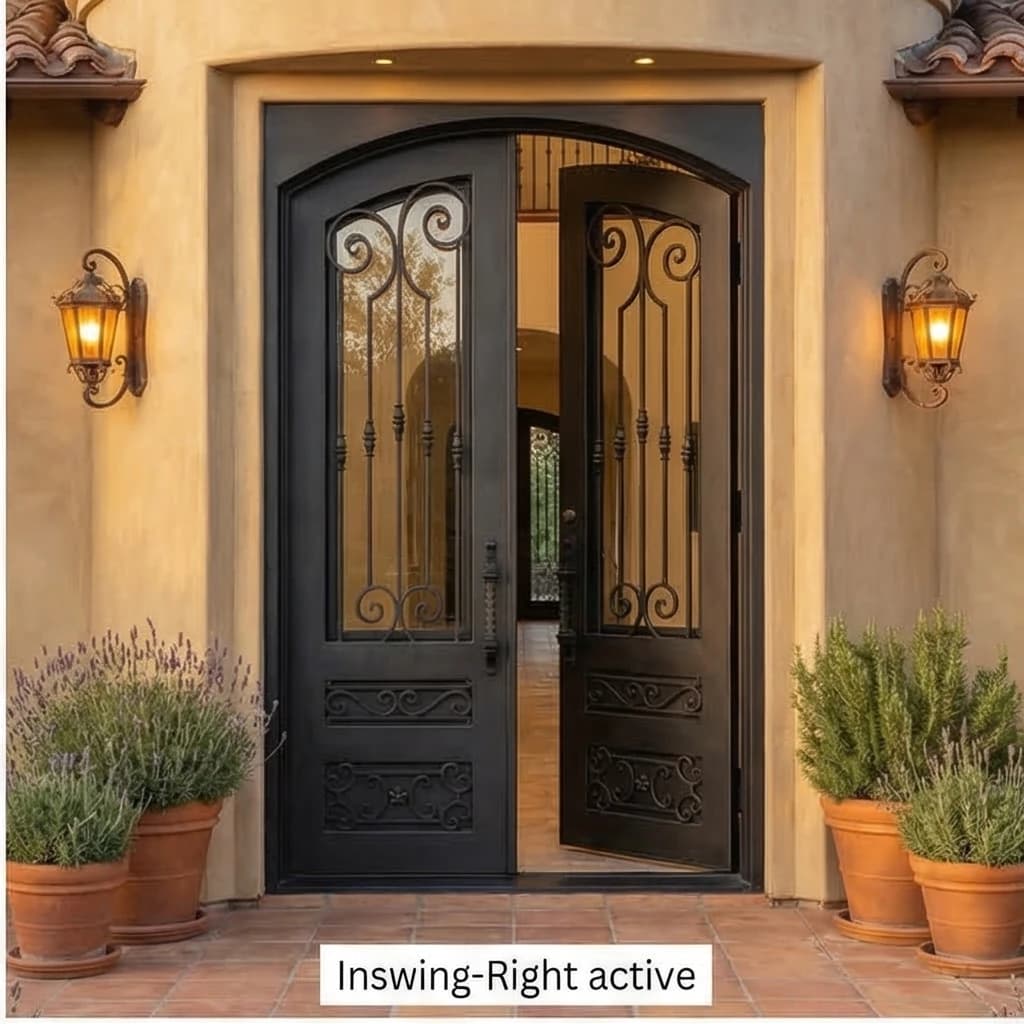
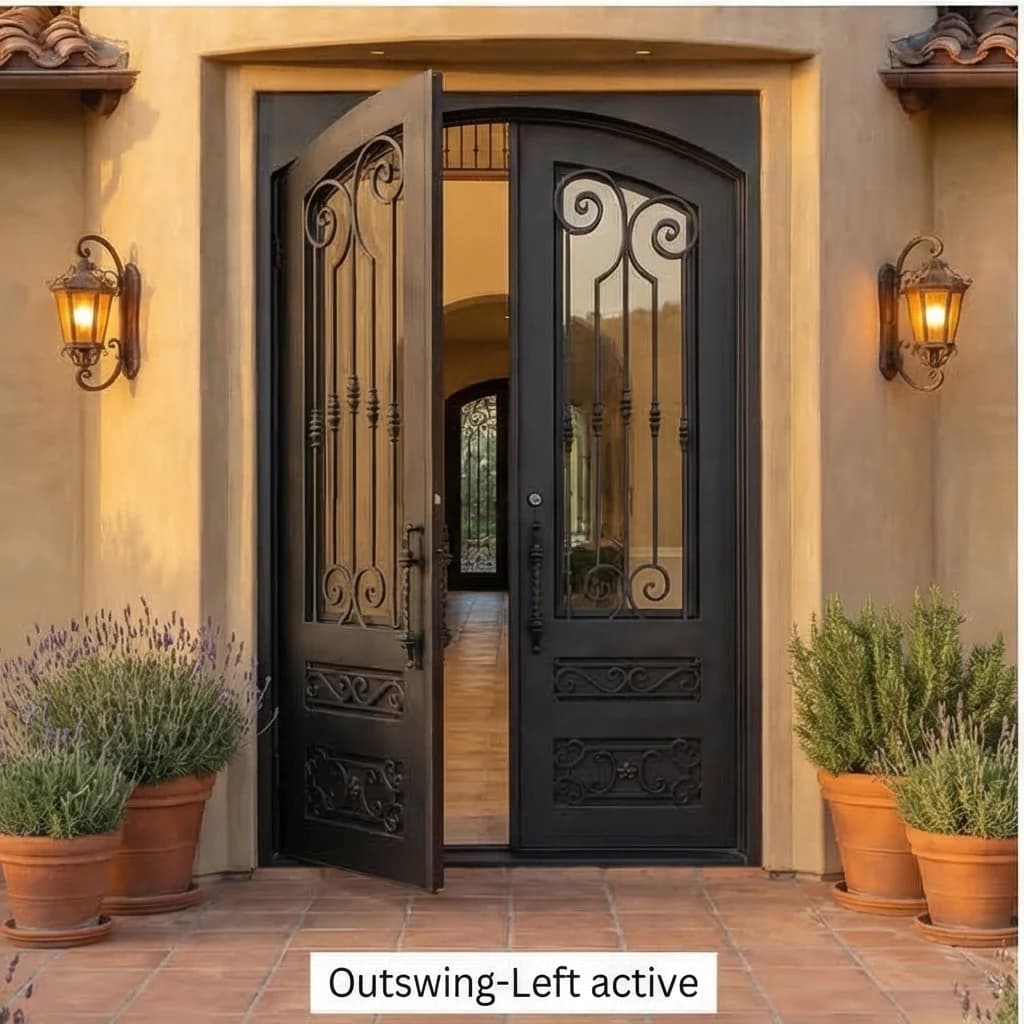
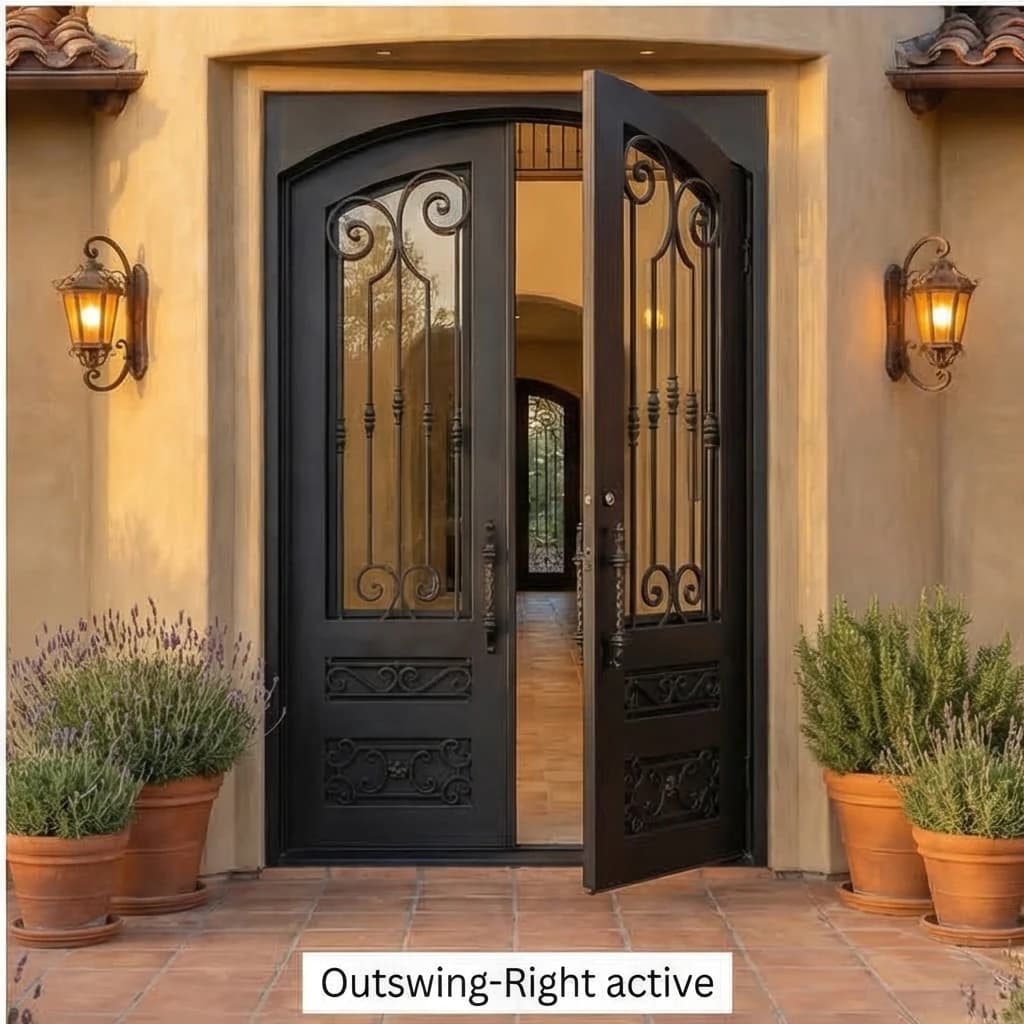
Simulated view from outside looking at the entry
Select a Direction
Inswing Left Active
Both panels swing inward (into the house).
Left Panel — Active (Primary Entry)
The left panel is your primary entry door — this is the panel you open and close daily. It has the handle and lock set.
Right Panel — Inactive (Flush Bolts)
The right panel is secured with flush bolts (top bolt and bottom bolt) that lock into the header and threshold of the door frame. This panel stays closed during everyday use but can be fully opened when needed — for example, when moving furniture or large items through the doorway.
How to Choose
- 1.Left or Right? Stand outside facing your door. Which hand do you naturally reach toward? That side should be your active panel.
- 2.Inswing or Outswing? Inswing is standard for most homes. Choose outswing if you have limited interior space near the entry, or if your area experiences hurricanes or strong winds (outswing doors resist wind pressure better).
- 3.Not sure? The most popular choice is Inswing Right Active — right panel opens inward with a right-hand reach.